Attendize is an open-source ticket selling and event management application built on the Laravel PHP framework. I follow it when organizers want to sell tickets and manage attendees on infrastructure they control — without paying service fees to third-party ticketing platforms. The GitHub project and attendize.com document the product as a full event stack: mobile-friendly public pages, checkout, payments, attendee messaging/exports, affiliate tracking, embeddable widgets, and a browser-based QR scanner for the door. Current releases sit in the v2.x line (e.g. 2.8.0 in composer.json), with install paths via manual LAMP/LEMP setup or a Docker make setup flow for development (Getting started).
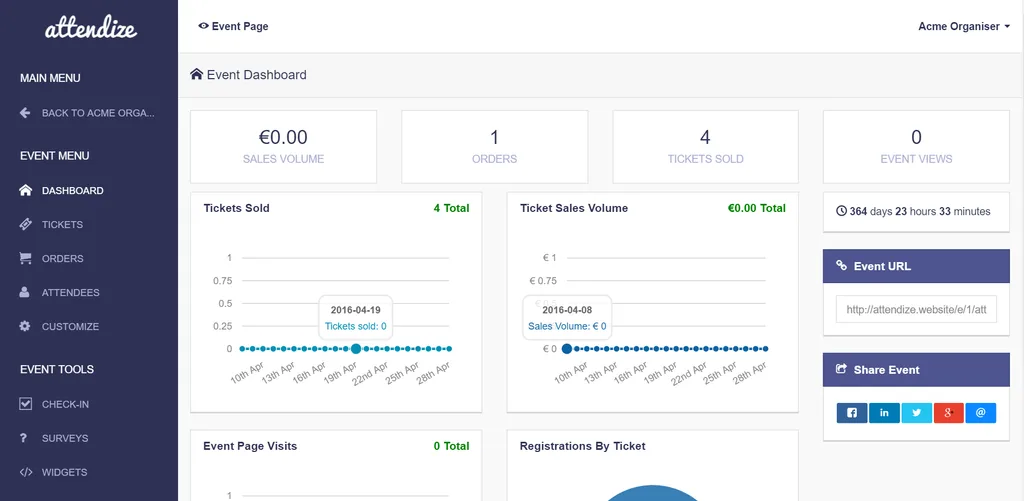
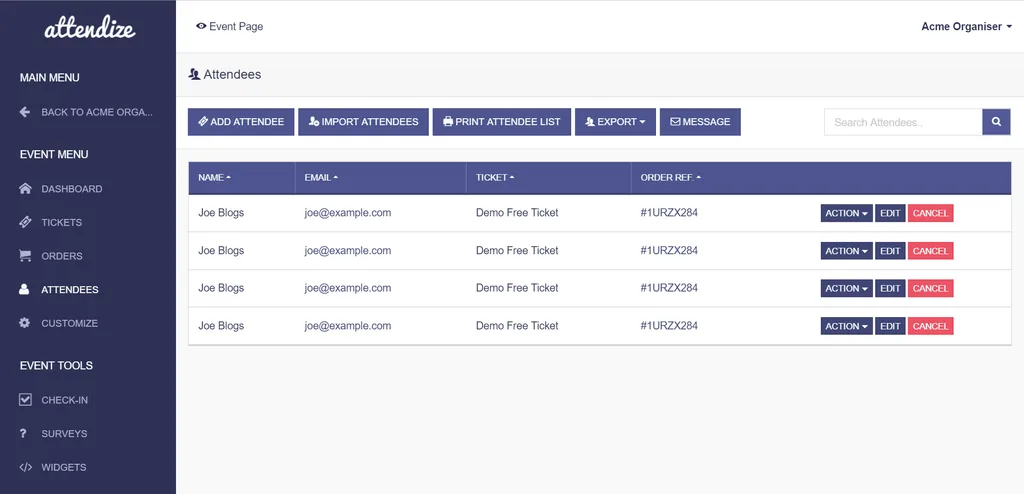
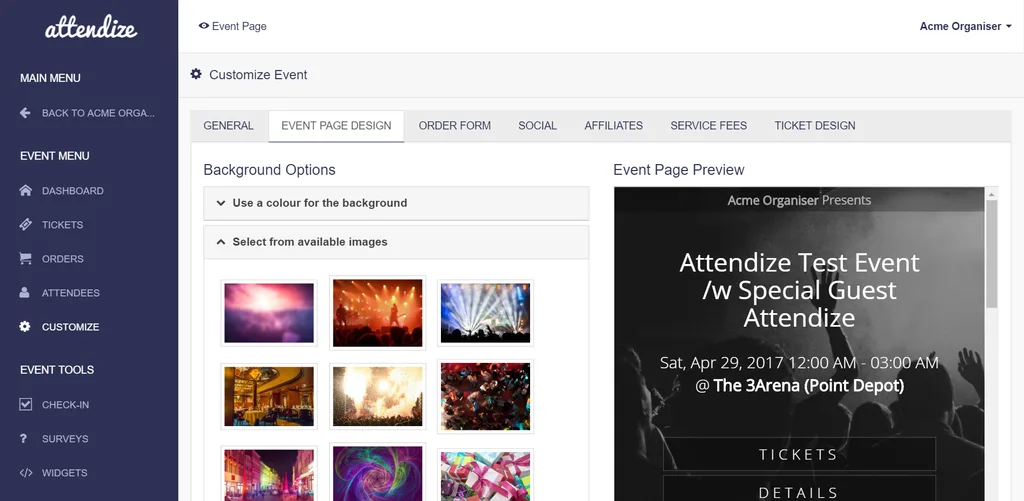
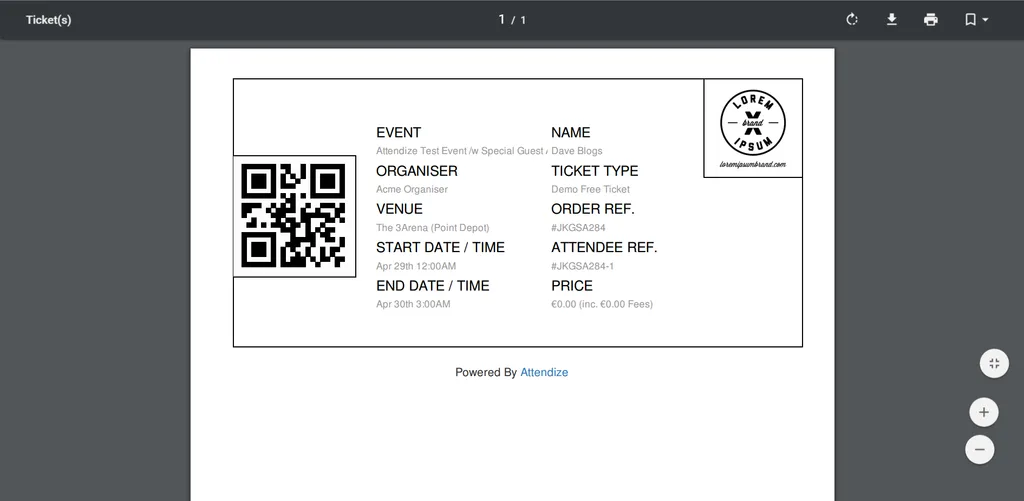
Official product shots below come from the Attendize screenshots on attendize.com.
What I like most about Attendize
I reach for Attendize when the job is real event ops on PHP/Laravel — not a custom “ticket PDF + Stripe Checkout” bolt-on that still needs check-in, messaging, and organizer branding.
1. End-to-end event + ticket loop
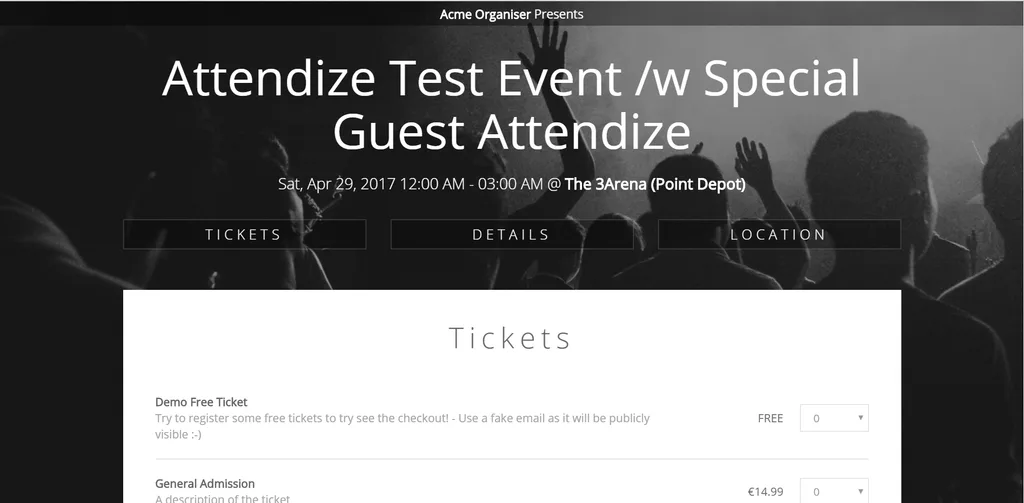
Public event pages, ticket types, checkout, attendee management (refunds, messaging), XLS/CSV export, print-friendly lists, and real-time style stats — as listed in the README and docs feature list.
Why it matters: Most organizers need sell → confirm → message → check in before they need a custom CRM.
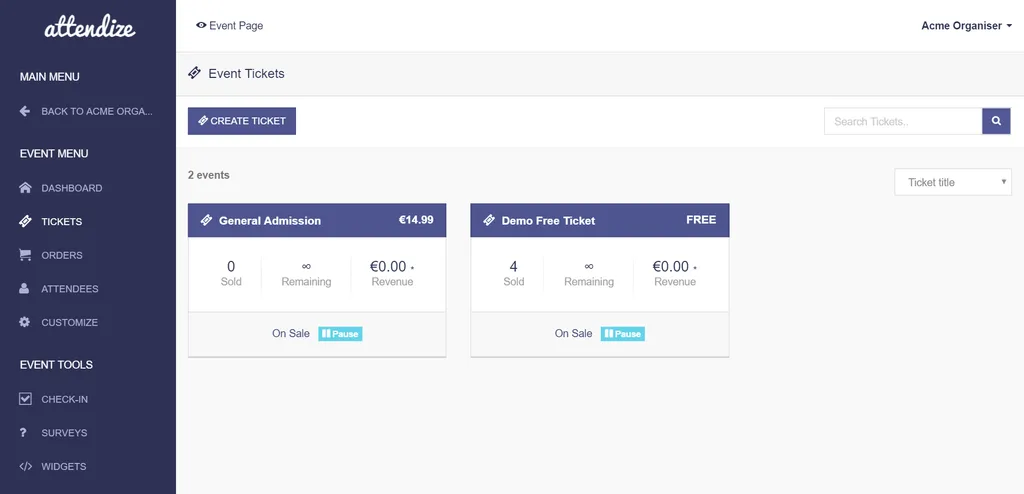
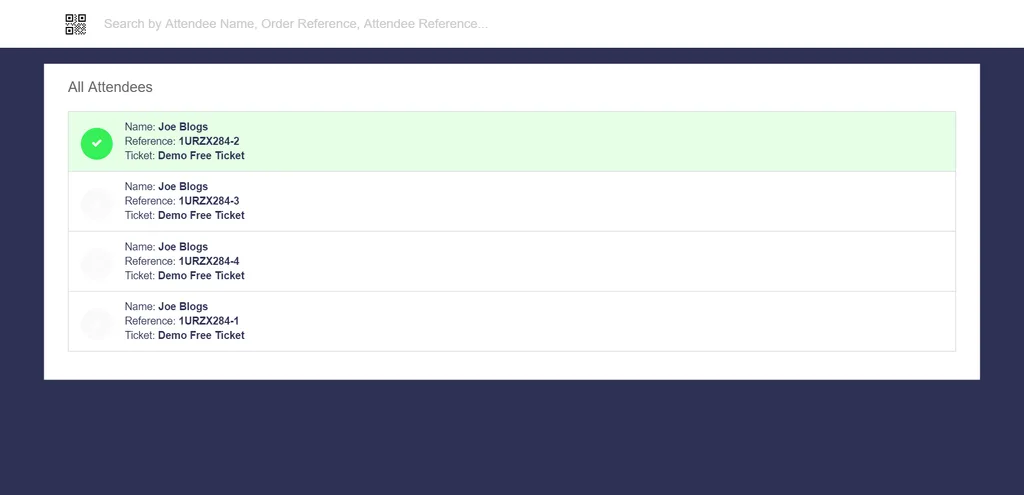
2. Door management without a proprietary scanner app
Browser-based QR code scanning for door management, plus customizable tickets with QR codes and organizer logos.
Why it matters: Venue staff can check in on a phone or laptop without buying a separate scanning stack.
3. Multi-organiser, multi-event orientation
Unlimited organisers/events (per product docs), public organiser listing pages, multiple currencies, and brandable tickets/pages.
Why it matters: Agencies and venues often run more than one brand or series on the same install.
4. Payments beyond a single gateway
Omnipay-backed Stripe and PayPal out of the box, offline payments, partial/full refunds, and optional service charges on tickets; README also notes Coinbase among supported options, with more gateways addable via Omnipay.
Why it matters: Local events often mix card, PayPal, and cash/bank transfer — a hard Stripe-only checkout breaks the workflow.
5. Embed and promote where traffic already lives
Ticket-selling widgets for existing sites/WordPress, social sharing, affiliate tracking (visits and sales volume), and custom checkout questions.
Why it matters: Many events already have a marketing site; Attendize can sell tickets without forcing every visitor onto a separate SaaS domain.
6. Self-host control vs fee-heavy SaaS
The whole pitch is owning the platform so you are not paying per-ticket platform fees to Eventbrite-class vendors. Source is AAL-licensed with optional white-label licenses if you need to remove “Powered by Attendize” (license).
Why it matters: High-volume or multi-event operators care about fee math and brand control; self-host shifts cost to hosting and ops.
TIP
For a first look: follow Getting started (manual install or Docker make setup), then smoke-test checkout + QR check-in + mail before promising a live on-sale date. Read troubleshooting early — Laravel document-root and storage/ permissions trip up first installs.
Project structure
High-level layout from the Laravel Attendize repository (v2 / Laravel 6 era):
| Path | Role |
|---|---|
app/Http/Controllers |
HTTP controllers for organiser, event, ticket, and public flows |
app/Models |
Eloquent models (Attendize\ PSR-4 alias in composer.json) |
app/Attendize |
Product-specific helpers / shared Attendize code |
app/Services |
Application services |
app/Services/PaymentGateway |
Payment gateway integrations (Omnipay Stripe/PayPal/etc.) |
resources/ |
Views, assets, lang |
routes/ |
HTTP routes |
database/ |
Migrations / seeds |
public/ |
Web document root (must point here in production) |
tests/ |
PHPUnit feature tests (SQLite-oriented suite per README) |
Mental model:
- Organisers & events — multi-organiser admin, public listing pages
- Tickets & checkout — ticket types, custom questions, service charges
- Payments — Omnipay gateways + offline; refunds
- Attendees — messaging, exports, print lists
- Door — QR on tickets + browser scanner
- Distribution — widgets, affiliates, social sharing
git clone https://github.com/Attendize/Attendize.git
cd Attendize
git checkout master
cp .env.example .env
composer install
php artisan key:generate
# Point the web server document root at ./public
# Then open https://your-ticket-site.example/install
Docker (dev) — from the docs:
make setup
# Installer: https://localhost:8081/install
# Or: docker-compose run php php artisan attendize:install
Upstream requirements (master / v2): PHP ≥ 7.1.3 (composer pins ^7.3), OpenSSL/PDO/Mbstring/Tokenizer/Fileinfo/GD, MySQL 5.7+. See Getting started.
Code analysis
Stack snapshot (from composer.json + README, Attendize ~2.8):
| Layer | Technology | Notes |
|---|---|---|
| Framework | Laravel ^6.5 | PHP ^7.3 |
| Payments | League Omnipay + Stripe/PayPal/Dummy | Extensible gateway layer |
| Tickets / PDF | DomPDF, wkhtml2pdf, milon/barcode | Printable tickets + barcodes/QR |
| Exports | Maatwebsite Excel | Attendee XLS/CSV |
| Images | Intervention Image | Logos / ticket branding |
| Money | superbalist/php-money | Multi-currency oriented |
| i18n | mcamara/laravel-localization | Localised routes/content |
| Storage | Flysystem AWS S3 optional | Media off-box if needed |
| License | Attribution Assurance License (AAL) | Keep “Powered by Attendize” unless white-label |
Strengths when I evaluate it:
- Product completeness for events — not just a payment link
- Laravel familiarity — deploy, mail, queues, and debugging stay in PHP ops habits
- Omnipay payment surface — Stripe/PayPal/offline plus room to add gateways
- Operational door path — QR tickets + browser scanner documented as first-class
Trade-offs / caveats:
- Laravel 6 / PHP 7.3-era stack — plan maintenance, security patching, and upgrade work; this is not a Laravel 11 greenfield app
- AAL attribution — free to self-host with the notice; white-label and SaaS redistribution need paid licenses (license page)
- Project support model — maintainers point paid support/licensing to attendize.com; GitHub issues are for bugs, not free ops support
- Branch/gateway nuance — docs still mention an older Laravel 5.2 line for some Omnipay v2 gateways; verify gateway choice against the version guidance
- Self-host means you own SSL, mail deliverability, backups, and capacity for on-sale spikes
Env sketch (illustrative — secrets stay in .env):
// .env (names illustrative; follow .env.example on install)
APP_URL=https://tickets.example.com
DB_CONNECTION=mysql
DB_HOST=127.0.0.1
DB_DATABASE=attendize
MAIL_MAILER=smtp
# Stripe / PayPal credentials configured via installer + Omnipay settings
Why people use it
| Audience | Why Attendize fits |
|---|---|
| Independent organisers | Sell tickets without per-ticket SaaS fees |
| Venues / series events | Multi-organiser / multi-event on one install |
| Privacy-conscious teams | Keep attendee data on their own server |
| Laravel / PHP shops | Ticketing UX on a familiar deploy stack |
| Sites with existing traffic | Embed widgets instead of forcing a full SaaS hop |
Skip it if you need a modern Laravel LTS greenfield, heavy SaaS multi-tenant ticketing without buying a SAAS license, or a fully managed Eventbrite-class product with zero PHP ops.
Conclusion
Attendize remains one of the clearest Laravel-native open-source ticketing options I follow: event pages, checkout, payments, attendee ops, and QR door check-in in one self-hosted package (repo, docs, getting started).
Honest caveat: treat it as a mature v2 Laravel 6 product, not a bleeding-edge framework showcase. Budget for PHP/MySQL ops, mail/DNS, and license/attribution rules before an on-sale date — and prove checkout + scanner on staging before selling real tickets.